Blog
Surgical Video Data Privacy, Misconceptions & the Benefits of PSO
Learn More

Caresyntax Blog
February 18, 2026
The modern surgical environment runs on constant coordination between the OR, anesthesia, pre-op, PACU, environmental services, and patient transport. For perioperative leaders, performance depends more on how well teams work together than on what happens inside a single operating room.
Yet in most hospitals, that coordination still happens through phone calls, hallway conversations, and manual status updates.
Around 30% of communication exchanges in the operating room fail1. These breakdowns lead to interpersonal tension, wasted resources, procedural delays, and medical errors. For a Director of Perioperative Services, this isn’t a soft metric. Poor communication across US hospitals drives billions in economic loss annually.
The breakdown concentrates between departments. The patient is already in the OR before the surgeon is notified. EVS gets called only after someone realizes a room is sitting idle. Recovering a patient in the OR instead of PACU costs two to five times more. Every two hours of saved overtime per OR per day translates to $700 to $1,400 in daily savings2.
In the current model, the charge nurse acts as a human switchboard, fielding calls and chasing information. Milestones like "patient in room" or "case end" are entered after the fact, useful for monthly reports but worthless for real-time coordination.
There’s also a staffing dimension. Nurses already spend up to 40% of their time on documentation3. Adding manual coordination tasks on top of existing pressure and fatigue is unsustainable and contributes directly to turnover.
The next step in perioperative performance isn't another isolated process improvement. It's shared situational awareness. When the OR, anesthesia, pre-op, and support services work from the same real-time view, coordination becomes simpler and less dependent on individuals exhausting themselves to hold the day together.
The shift is about timing. When leaders see what's happening as it happens, they can intervene early: positioning equipment, supporting a team through a difficult case, or reallocating resources. The job changes from addressing yesterday's problems to supporting teams while there's still time to affect outcomes.
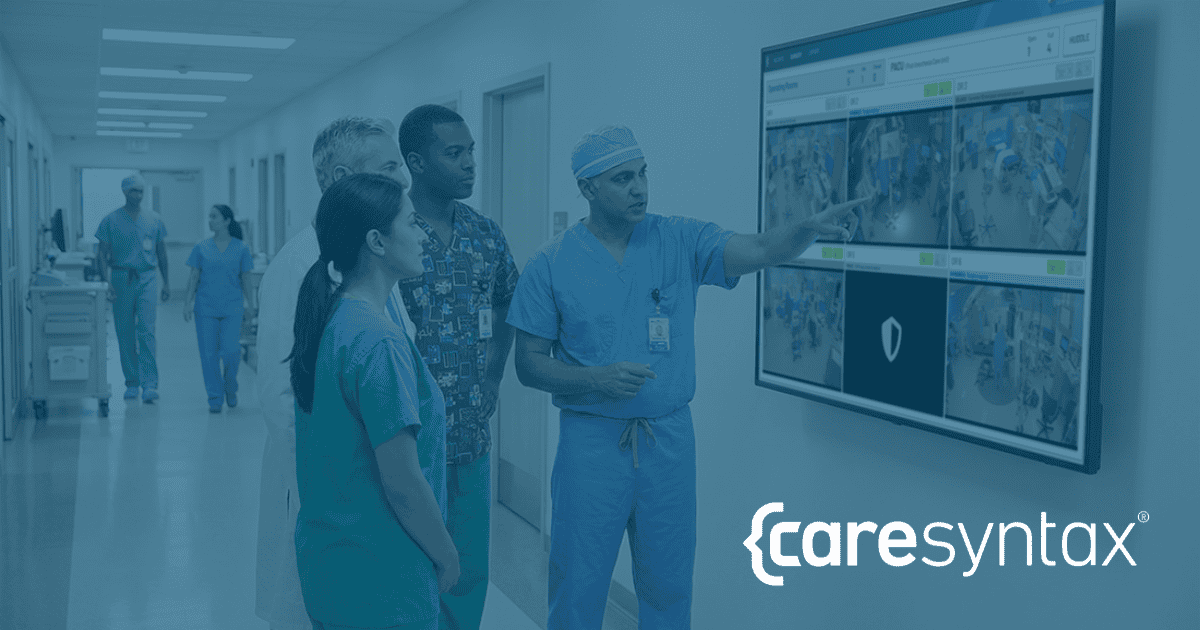
Caresyntax provides real-time surgical workflow intelligence. By automatically identifying key operational milestones, the system creates a live view that triggers communication across departments. Surgeons and anesthesia are notified the moment a patient enters the room. EVS is alerted as soon as a room is ready for turnover. Intraoperative needs like equipment, consultations, or unexpected complications surface immediately, enabling smoother transitions and better throughput.
Future capabilities will simplify nursing documentation by writing timestamps directly back into the EHR, returning time to patient care and reducing administrative burden on surgical teams.


Caresyntax is the only vendor-neutral, enterprise-scale surgical technology data platform you need to make surgery smarter, safer, and more profitable. We offer software, data, and professional services solutions across the entire surgical continuum.